














Agartala, August 26:

With elections to the Tripura Tribal Areas Autonomous District Council (TTAADC) Village Committees approaching, the Opposition CPI(M) has stepped up efforts to revive its organisation and convert growing public discontent against the government into electoral support, as differences within the ruling BJP and its tribal alliance partners TIPRA Motha party and IPFT create fresh political space for the left party.
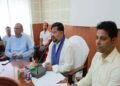
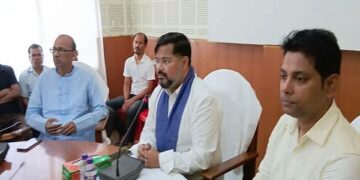
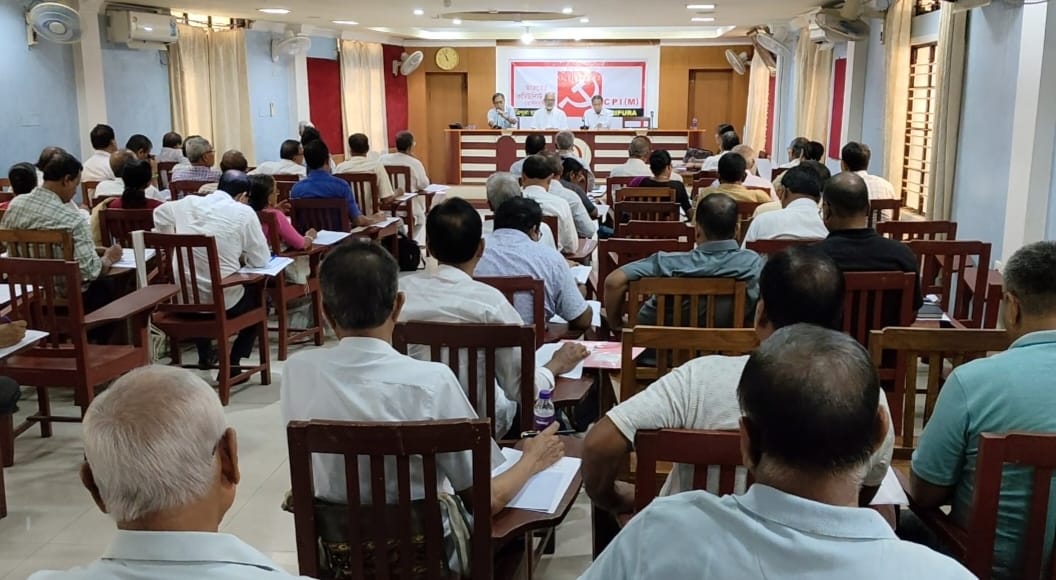
The CPI(M) state committee began a two-day meeting at the party headquarters at Melarmath in Agartala on Wednesday, with party general secretary M.A. Baby, former Chief Minister Manik Sarkar and state secretary Jitendra Chaudhury among the senior leaders attending.
The sustained focus of the CPI(M) leadership on the ADC polls underlines the importance the party attaches to the tribal electoral landscape. The state committee has held several meetings over the past few months to prepare for the Village Committee elections, with Baby attending two of them.
For the CPI(M), the elections offer an opportunity to test whether it can rebuild its organisational base in tribal areas where the party once exercised considerable political influence.
Tripura has 20 reserved ST Assembly constituencies among its 60 seats, making the tribal belt crucial to any serious attempt to reshape the state’s electoral balance.
The political contest, however, has changed substantially. The BJP, its tribal-based ally Tipra Motha and the IPFT now occupy much of the political space in the state’s tribal areas that was once a principal stronghold of the CPI(M). With strains between the BJP and its alliance partners becoming increasingly visible, the CPI(M) is seeking to turn the emerging political uncertainty into an opportunity for organisational recovery.
Speaking to reporters in the sidelines of the state committee meeting, Chaudhury, who is LOP, said the meeting would review political and organisational developments since the previous meeting and formulate the party’s programmes for the coming period.
He claimed that several serious developments had taken place in Tripura over the past month, alleging deterioration in the law-and-order situation following the death of the Director General of Police, besides corruption, nepotism, financial mismanagement and growing public hardship. He also alleged an increase in atrocities against women.
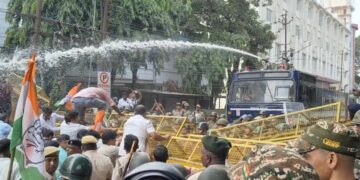
The CPI(M) state secretary cited the party’s August 10 ‘jail bharo’ agitation, in which he claimed thousands of people participated, as evidence of growing public anger against the government. The party intends to assess how such discontent can be translated into organised political support at the polls.
The Village Committee elections will be a major focus of the two-day deliberations. The party is also expected to finalise its position on the Assembly’s forthcoming short session and prepare for possible urban local-body elections in November-December.
Chaudhury, also a politburo member, said the party would discuss how its political positions could be taken to the people through both the electoral campaign and the Assembly.
The CPI(M) is also seeking to make the differences between the BJP and Tipra Motha a significant campaign issue. Chaudhury described the public friction between the two parties as reflecting both political compulsions within the alliance and what he termed political “drama”.
The CPI(M) intends to highlight the contradiction of alliance partners being part of the same government while publicly differing on issues, arguing that the developments have exposed tensions within the ruling arrangement.
For the CPI(M), the significance goes beyond the immediate BJP-Tipra Motha confrontation. Tipra Motha and the IPFT are both indigenous tribal-based political forces and have established political influence in areas where the CPI(M) historically maintained a strong organisational and electoral presence.
The emergence of these parties has fundamentally altered the political arithmetic of the tribal belt. The CPI(M)’s current strategy, therefore, is not simply to attack the BJP government but to regain political relevance among tribal voters and rebuild its organisational machinery ahead of the 2028 Assembly election.
The party is expected to carry the same political narrative into the Assembly, where it plans to raise issues including what it describes as anti-people policies of the BJP-led government. In addition national political issues, including the Ram temple corruption, the Citizenship Amendment Act, youth and student protests and policies of the Narendra Modi government, are also on the agenda of the state committee meeting.
Chaudhury alleged that the BJP does not genuinely respect the Constitution and democratic norms and accused it of relying on money power, political manoeuvring and defections to retain power. He also characterised the BJP-Tipra Motha differences as part of a wider political strategy.
The immediate test, however, will be the ADC Village Committee elections. The CPI(M) wants to prevent the BJP from securing an uncontested political advantage while simultaneously testing whether anti-government sentiment can be converted into votes.
The larger challenge for the party is rebuilding a tribal base that has eroded over successive electoral cycles. The Village Committee elections, followed by the expected local-body contests and the 2028 Assembly election, could therefore become the first stages of a broader CPI(M) attempt to regain lost political ground in Tripura’s tribal heartland.