














Agartala, August 25:

TIPRA Motha supremo Pradyot Kishore Debbarma on Tuesday struck a cautious but firm position on the party’s political equation with the BJP, saying no talks on an alliance had taken place and making it clear that his party would not enter into any arrangement merely for the benefit of its leaders.
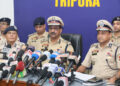
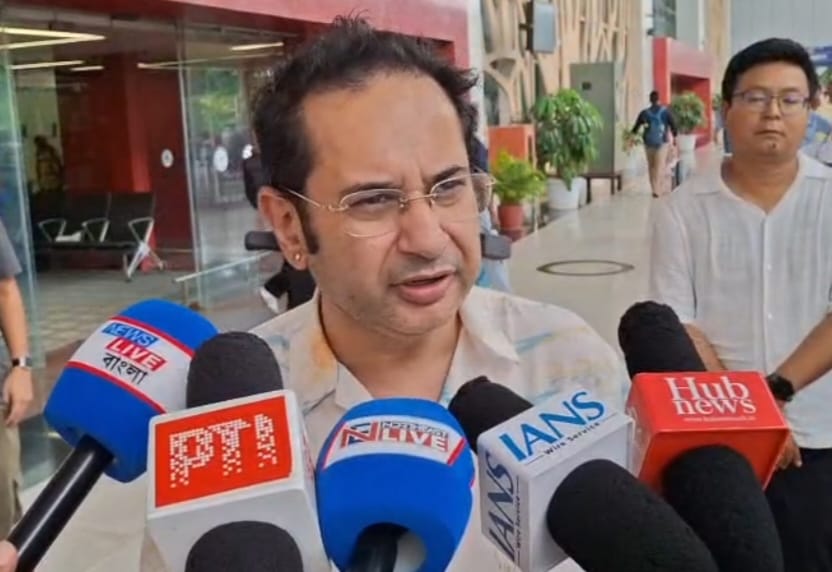
Speaking to reporters after arriving at Maharaja Bir Bikram Airport here, Debbarma said he was “completely in the dark” about any reported political negotiations, asserting that neither the BJP nor anyone else had contacted him for talks.
“Officially, nothing has happened. Nobody has contacted me and nobody has spoken to me,” he said, adding that an alliance could not be justified before the rights and demands of the Tiprasa people were addressed.
Debbarma’s remarks assume significance amid continuing uncertainty over the BJP-TIPRA Motha relationship in Tripura and the pending implementation of the March 2024 Tripartite Agreement involving the Centre, the Tripura government and TIPRA Motha. He indicated that the implementation of commitments to the indigenous population would be central to any future political understanding.
“If a national party wants an alliance, they should give our people their rights. If they do not, how will we go back to our people and ask them to support an alliance?” he said.
He also warned that TIPRA Motha was prepared to contest elections on its own if an agreement was not reached before the election process began. Recalling the party’s electoral record in the Tripura Tribal Areas Autonomous District Council and the 2023 Assembly polls, he said the party had the organisational capacity to fight independently.
Debbarma simultaneously broadened the issue beyond immediate electoral calculations, arguing that constitutional safeguards for tribal land and the future of the indigenous population were essential given Tripura’s geographical proximity to Bangladesh.
“I have a lot of respect for the Prime Minister and the Home Minister. But today they are in power. Tomorrow they may not be in power,” he said, questioning what constitutional protection would remain for the TTAADC and its people under a different political dispensation.
He referred to safeguards available to tribal communities in other northeastern states and said Tripura’s indigenous population should receive comparable protection. His concern, he stressed, was not directed against Bengali residents of Tripura but towards protecting tribal land and ensuring safeguards against possible demographic pressures in the future.
“We are not fighting the Bengalis in Tripura. We are fighting to protect our land,” Debbarma said, adding that non-tribal residents living within the ADC areas should continue to receive full legal protection and rights so that all communities could coexist peacefully.
The TIPRA Motha chief also criticised what he described as excessive party-centric politics in Tripura, saying political parties were failing to focus on employment, development and the state’s ability to compete with neighbouring states.
“Nobody is thinking about the future of Tripura. Nobody is thinking about employment,” he said, while pointing to Assam, Meghalaya and Odisha as examples of states making progress.
He expressed concern over post-election political violence and the continuing clashes among rival parties, saying such incidents project a negative image of Tripura outside the state.
On possible political equations involving the Congress, Debbarma said he respected Congress leaders including Sunil Roy Barman, Bidyut Sinha and Gopal Roy, while dismissing the suggestion that he would enter an alliance for personal or financial considerations.
“I want the rights of my people, that is all. I do not want to fight with anybody. I respect everyone,” he said.
On the immediate political question of who held the initiative in the alliance negotiations, Debbarma said he did not know, but stressed that the final decision would rest with the electorate.
“The ball may be in whose court, I do not know. But the last ball is always in the people’s court. The people will decide,” he said.
Debbarma’s comments effectively put the BJP-TIPRA Motha political relationship on a conditional footing: electoral cooperation cannot be separated from the implementation of commitments to the indigenous population. With elections approaching and the Tripartite Agreement remaining a central political issue, his insistence on substantive rights before any alliance signals that TIPRA Motha is seeking to retain political space independent of its present relationship with the BJP.