
















Agartala, August 18:

Tripura is looking to expand the use of drone and space technology for surveillance of its international border, forests and difficult terrain, with the State government working to establish a dedicated drone hub, Science, Technology and Environment Minister Animesh Debbarma said on Tuesday.
Speaking to reporters on the sidelines of a National Space Day programme at Pragya Bhavan here, Debbarma said the convergence of satellite-based applications and drones could provide authorities with a more effective mechanism for monitoring areas that are difficult to access on the ground.
“For those working on the ground, space can provide another eye,” he said, stressing the importance of satellite technology for obtaining advance information on weather, forest destruction and developments along the international border.
Debbarma said Tripura’s geographical characteristics make space and drone applications particularly relevant. The State has extensive forest cover, difficult hilly terrain and shares an international border with Bangladesh, creating a need for efficient systems capable of providing timely information to field agencies.
The Minister said efforts were underway to develop Tripura as a drone hub, with the technology having potential applications in surveillance and monitoring. A centralised monitoring mechanism could enable authorities to track movements and obtain information from locations that are otherwise difficult to monitor continuously, he said.
He also stressed that satellite technology should not be confined to space research, but should be translated into applications that directly benefit people and strengthen governance.
According to Debbarma, satellite-based applications could support weather monitoring, agriculture, fisheries, forest protection and disaster management. Timely satellite information could help farmers and field agencies respond better to changing weather conditions, while satellite imagery could assist authorities in identifying forest degradation and assessing areas affected by natural disasters.
The Minister advocated greater integration of satellite systems with drone technology, saying such coordination could provide both a broad overview and detailed ground-level information. Drones could be deployed for targeted monitoring, while satellite imagery could provide a wider geographical picture.
Debbarma also linked the expansion of emerging technologies with employment and research opportunities for Tripura’s youth. Referring to institutions such as the National Institute of Technology and Tripura Institute of Technology, he said students should be encouraged to acquire expertise in advanced technologies and pursue opportunities in research and employment across the country and abroad.
“Tripura will have maximum benefit because our human resources are very good quality,” he said.
Emphasising the broader significance of space technology, Debbarma said modern technological development was increasingly dependent on space-based infrastructure.
“Space does not belong to Tripura alone. Space is for the entire globe,” he said, arguing that the benefits of space technology should reach sectors directly connected with people’s lives.
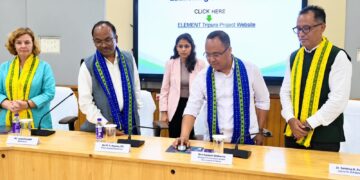
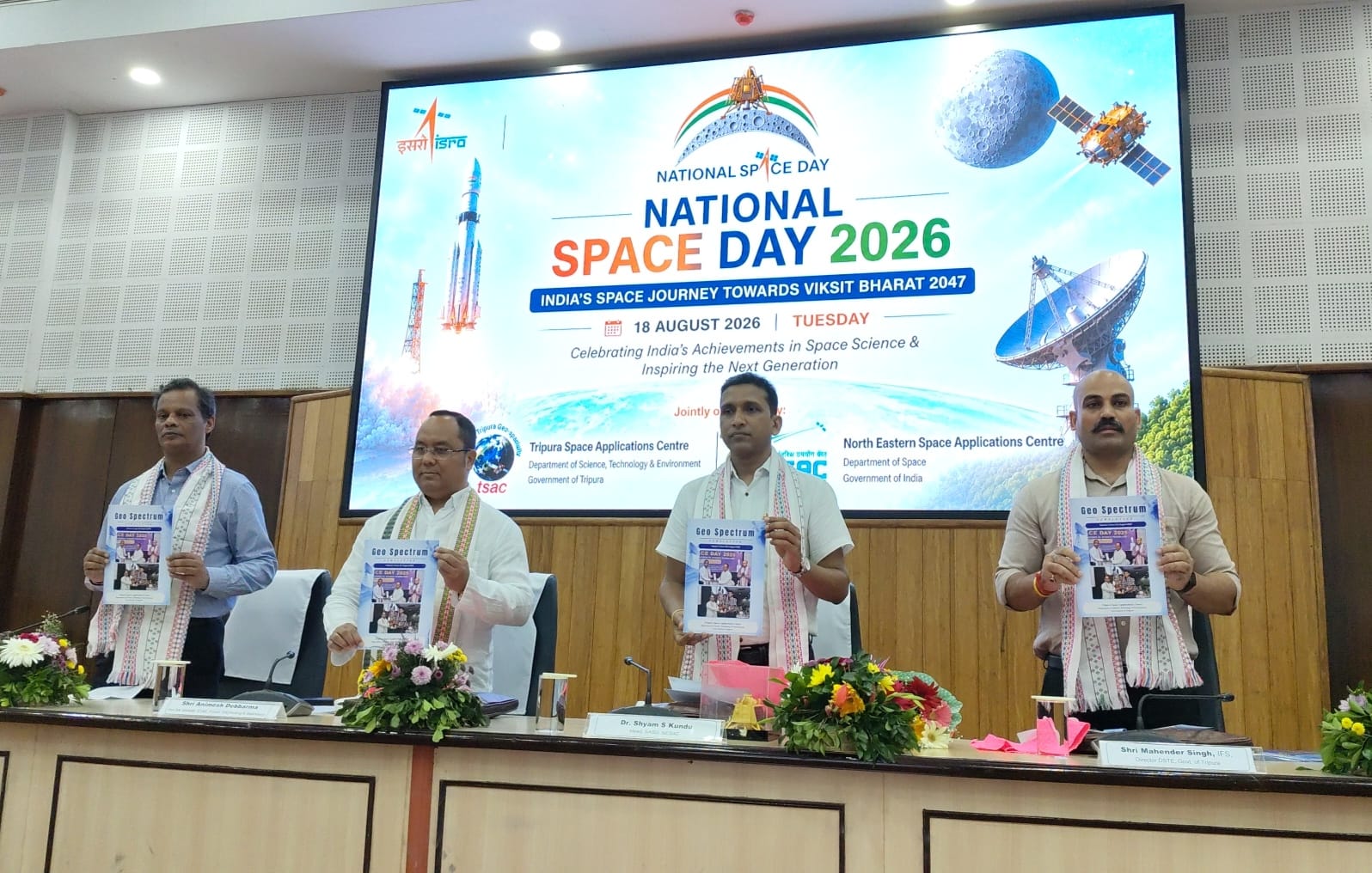
The National Space Day programme was organised jointly by the Department of Science, Technology and Environment and the Tripura Space Applications Centre (TSAC). Principal Secretary Chaitanya Murti, Director Mahendra Singh, former director Dr Debiprasad Duari and NESAC representative Dr Shyam S. Kundu, along with scientists and senior officials, attended the programme.
A technical session held as part of the programme focused on developments in space science and its future applications.
The State’s push for drone and satellite-based applications comes as Tripura seeks to use emerging technologies not only for surveillance but also for forest conservation, disaster preparedness, agriculture and fisheries, while creating a larger technology ecosystem for its young workforce.