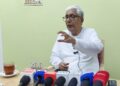
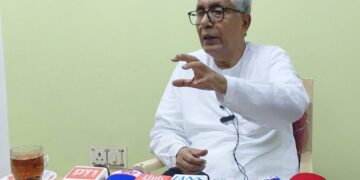















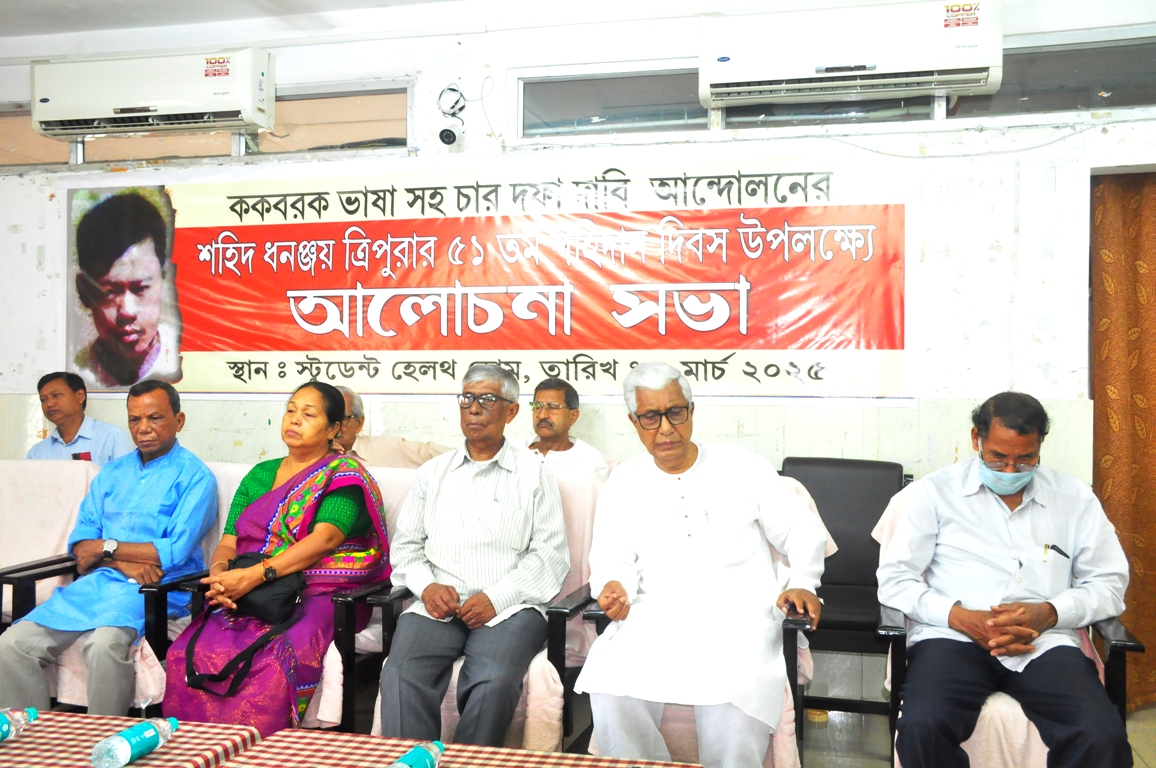
Agartala: Mar 03: A discussion meeting was organized on Monday to mark the 51st Martyrdom Day of Shaheed Dhananjay Tripura, with prominent figures such as former Chief Minister Manik Sarkar, Left Front Convener Narayan Kar, and others in attendance. The meeting, held at the Student Health Home, focused on the historical significance of Shaheed Dhananjay Tripura’s sacrifice and the political climate of the time.

Speaking at the event, former Chief Minister Manik Sarkar recalled the long-standing political struggles in Tripura, tracing them back to the era of princely rule. Sarkar emphasized that during this time, efforts to work in the interest of the people with a democratic perspective were consistently thwarted. He pointed out that while there were no shortage of political parties in the state, many of them raised slogans primarily to serve their narrow political interests, rather than to address the genuine demands of the people. Instead of supporting movements, these parties often conspired to undermine them, he said.
Highlighting the socio-political challenges faced by the tribal community, Sarkar mentioned that during the princely rule, the kings of Tripura neglected the welfare of the tribals. Most tribals were illiterate, and efforts like the Jana Shiksha Samiti were formed to spread education among them. Despite facing significant opposition, the Jana Shiksha Samiti managed to establish several private schools, making significant strides in tribal education.
Sarkar also reflected on the events leading to the martyrdom of Dhananjay Tripura in 1975. He explained that the Ganamukti Parishad had called for a law disobedience movement in protest against the Congress government. Dhananjay Tripura was martyred in police firing while participating in this movement at Jolaibari Tehsil. His death galvanized the movement, which continued even after the imposition of emergency and the eventual defeat of the Congress in the elections that followed.
Through this reflection, Sarkar honored the sacrifices of Dhananjay Tripura and the resilience of the people who fought for their rights.