


















Agartala, August 21:

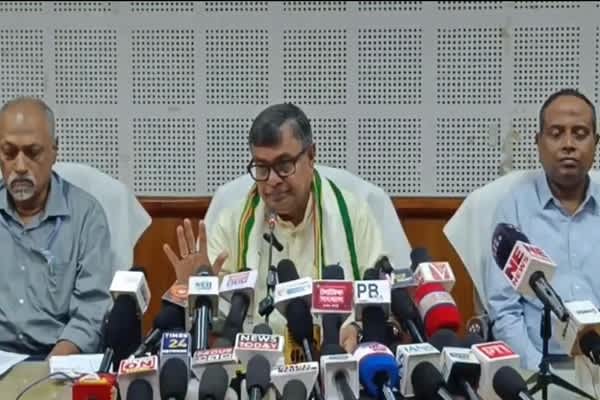
In a politically significant move amid mounting public protests over sharply higher electricity bills, the Tripura Cabinet has decided that consumers will not bear the additional burden arising from the revised power tariff for 2026-27. The state government will absorb 100 per cent of the additional tariff burden, benefiting nearly 10 lakh electricity consumer families, Power Minister Ratan Lal Nath said at a press conference at the Civil Secretariat on Friday.
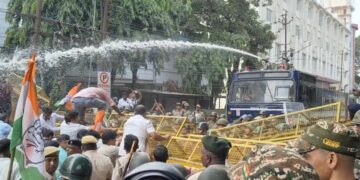
The decision comes after widespread resentment over higher electricity bills, particularly following increases in fixed charges. Consumers staged protests and demonstrations at several electricity offices, while opposition parties including the CPI(M) and Congress stepped up their attack on the BJP-led government over the tariff hike, smart meters and power-sector management.
The government’s decision effectively seeks to take the politically sensitive issue of rising household electricity bills out of the immediate consumer burden. The move follows a series of meetings chaired by Chief Minister Dr Manik Saha as public anger intensified over the issue.
Nath clarified that the tariff itself is determined by the Tripura Electricity Regulatory Commission (TERC), an independent regulatory body empowered under Sections 61 and 62 of the Electricity Act, 2003. The Tripura State Electricity Corporation Limited (TSECL) submits its cost-based proposal to the regulator.
The government, however, has decided to neutralise the additional burden on consumers through financial support.
According to the figures announced by the Power Minister, the measure involves ₹77.57 crore in subsidy, besides an additional ₹117.13 crore expenditure, taking the government’s overall financial commitment to ₹194.70 crore.
The relief will cover domestic consumers as well as commercial, agricultural and industrial consumers. Railway traction has been excluded. Defence establishments, Railways, All India Radio and Doordarshan will receive a 15 per cent subsidy, according to the government.
Consumers who have already paid bills calculated under the revised tariff will also be compensated. The decision will be treated as effective from May 2026, with the excess amount to be adjusted against bills for September, October and November.
The Cabinet decision comes against a backdrop of sustained political pressure. The CPI(M) had called for resistance against the tariff increase, while the Congress separately organised protests demanding withdrawal of the higher charges and raising concerns over smart meters and power-sector management.
The BJP-led government had initially maintained that tariff fixation was the statutory responsibility of TERC, but the growing public backlash prompted the government to step in and absorb the additional burden. The decision therefore marks a shift from a regulatory explanation of the tariff increase to a direct fiscal intervention by the government to protect consumers from its impact.