















Agartala, August 21:

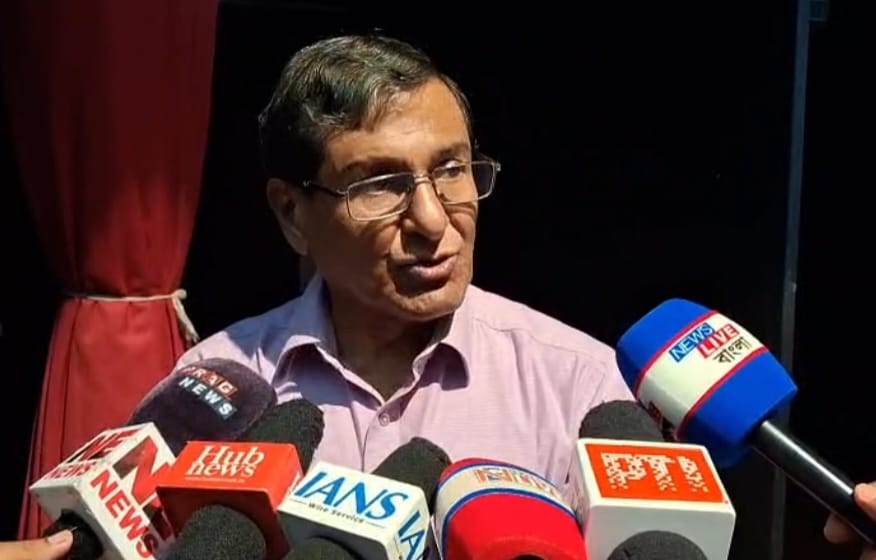
Tripura’s Former Power Minister and senior CPI(M) leader Manik Dey on Friday launched a sharp political attack on the Tripura government over its decision to provide 100 per cent subsidy on the recently increased electricity tariff, calling it a “temporary relief” announced in the face of mounting public anger rather than a permanent solution to the crisis confronting the state’s power sector.
Reacting to the Cabinet decision announced earlier in the day by Power Minister Ratan Lal Nath, Dey alleged that the government had no accountability towards consumers, arguing that repeated tariff increases had pushed the state’s electricity system into a “completely devastated” condition.
“If there was accountability, the tariff would not have been increased repeatedly,” Dey said, questioning the government’s justification for successive hikes in electricity charges.
Dey disputed the government’s claim that consumers were being given a major subsidy, arguing that the government was effectively returning only a portion of the additional burden already collected from consumers through electricity duty and other charges.
“The subsidy is being given from the money collected from the people,” he argued, questioning who was actually subsidising whom.
The former Power Minister also questioned the financial condition of the Tripura State Electricity Corporation Limited (TSECL), asking how the corporation had reached its present financial position when, according to him, it had maintained a broadly balanced financial position during the Left Front period and had even paid dividends to the state government.
Dey attributed the deterioration to what he described as operational and distribution-related failures and alleged that the government had failed to adequately strengthen Tripura’s own generation capacity.
He said the decline in indigenous generation had increased dependence on purchased power, contributing to the widening financial gap of the corporation.
Referring to the government’s explanation that tariff revision was necessary to bridge the gap, Dey questioned whether adequate efforts had been made to control expenditure and improve the corporation’s management.
He also criticised the impact of fuel-related charges and fixed charges on consumers, arguing that increases were being passed on to electricity users without comparable relief.
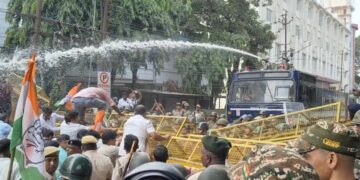
“The people have come out on the streets across the state,” Dey said, linking the latest subsidy decision to the growing public protests against higher electricity bills. He cautioned that reducing the latest increase through subsidy did not reverse the burden imposed through earlier tariff and charge increases.
Dey was particularly critical of the government’s handling of smart meters. He alleged that consumers were complaining of readings higher than their actual consumption and raised questions over maintenance, replacement and accountability for faulty meters.
Dey also questioned the continuation of the smart-meter rollout, arguing that the government’s announcement on tariff subsidy had not addressed the concerns surrounding the meters.
He further alleged that the government was gradually moving the power sector towards private management and warned that the financial deterioration of the state power corporation could eventually facilitate its transfer into private hands.
“The corporation has been brought to a critical condition, but no permanent remedy has been announced to save it,” Dey said.
He maintained that the latest subsidy decision could provide consumers only temporary relief and would not resolve the underlying financial crisis. According to him, a permanent solution would require restoring the financial health of the power corporation, strengthening Tripura’s own generation capacity, improving operational efficiency and ensuring that the utility remains under public control.
Dey also accused the government of using the subsidy announcement to contain public anger following widespread protests over the tariff hike. He cautioned that the relief could prove temporary if the corporation’s underlying financial problems remained unresolved.
The CPI(M) leader’s remarks came hours after Power Minister Ratan Lal Nath announced the Cabinet decision to absorb 100 per cent of the impact of the latest electricity tariff increase through government subsidy, providing immediate relief to consumers following widespread criticism over higher power bills.
The political confrontation over the tariff issue is now shifting from the immediate question of consumer relief to the larger debate over the financial management, generation capacity, smart-meter rollout and future ownership and control of Tripura’s power sector.