














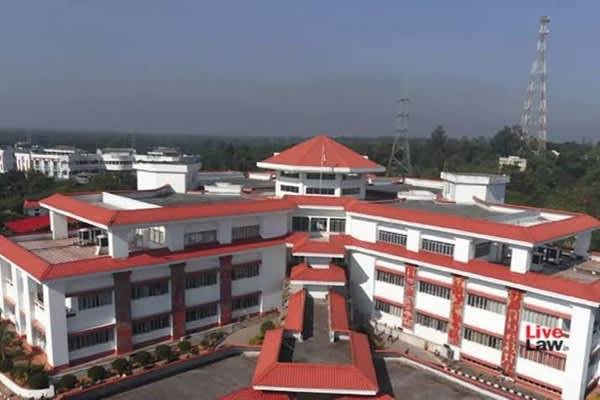
Agartala, October 6: The Tripura High Court has directed the Tripura Tribal Areas Autonomous District Council (TTAADC) to furnish details of teacher vacancies in schools under its jurisdiction, including the number of single-teacher High Schools and Higher Secondary Schools.

A Division Bench comprising Chief Justice M S Ramachandra Rao and Justice S Datta Purkayastha issued the direction while hearing a suo motu public interest litigation, WP(C)(PIL) No. 09 of 2026, *Court on its own motion vs Union of India and Others*.
The Bench impleaded the TTAADC, through its Chief Executive Officer, as a respondent and directed the council to file a counter affidavit on the issues raised before the court.
The council has been asked to provide detailed data on teacher vacancies in tribal schools and explain the engagement of contractual teachers instead of making regular appointments. It has also been directed to furnish specific information on the number of single-teacher schools functioning under its jurisdiction.
The court’s directions came during consideration of the broader issue of teacher shortages in government schools in Tripura.
According to figures submitted by the state government, 15,449 teacher posts fell vacant between 2018-19 and 2023-24 due to retirements and terminations. Against these vacancies, only 6,659 appointments were made, leaving a shortfall of nearly 9,000 teachers.
The Bench also took note of the pace of recruitment through the Teachers’ Recruitment Board, Tripura (TRBT). It observed that the board had advertised only 700 Graduate Teacher posts in September 2025 and had not issued any fresh advertisement for such posts in 2026 so far.
The court urged the state government and TRBT to take urgent steps to fill the vacant posts, observing that an adequate teaching workforce was essential for maintaining the quality of education in government schools.
The Bench also examined the availability of basic infrastructure in schools on the basis of UDISE 2025-26 data.
It noted that electricity connections were available in 84 per cent of schools, while drinking water facilities were available in 4,048 of the state’s 4,144 schools. Toilet facilities were available in 90 per cent of schools for girls and 92 per cent for boys.
The court directed the authorities to bridge the infrastructure gaps and work towards ensuring complete coverage of essential facilities.
The matter has been listed for November 16, when the TTAADC’s counter affidavit and the required data will be examined.