













Agartala, October 1: Amid an ongoing controversy over the Election Commission’s handling of the Special Intensive Revision (SIR) of electoral rolls, including reported differences within the poll panel over voter-list procedures, the Election Commission has introduced changes aimed at reducing the burden on electors during the revision process.

Under the revised procedure, voters whose names are not found in the draft electoral roll will not be automatically deleted, while Electoral Registration Officers (EROs) will conduct hearings only in exceptional cases. Wherever necessary, hearings will, as far as possible, be held virtually or through video calls, West Tripura District Magistrate and District Election Officer Dr Vishal Kumar said on Thursday.
The changes come ahead of the SIR in Tripura, which is scheduled to begin on October 27. The Election Commission had recently announced that Booth Level Officers (BLOs) would also visit the homes of voters flagged during the revision, collect the required documents and upload them for consideration by the ERO, with such electors ordinarily not required to appear personally before the ERO or AERO.
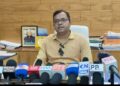
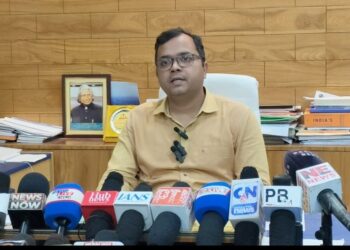
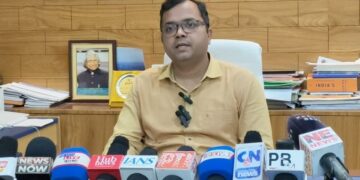
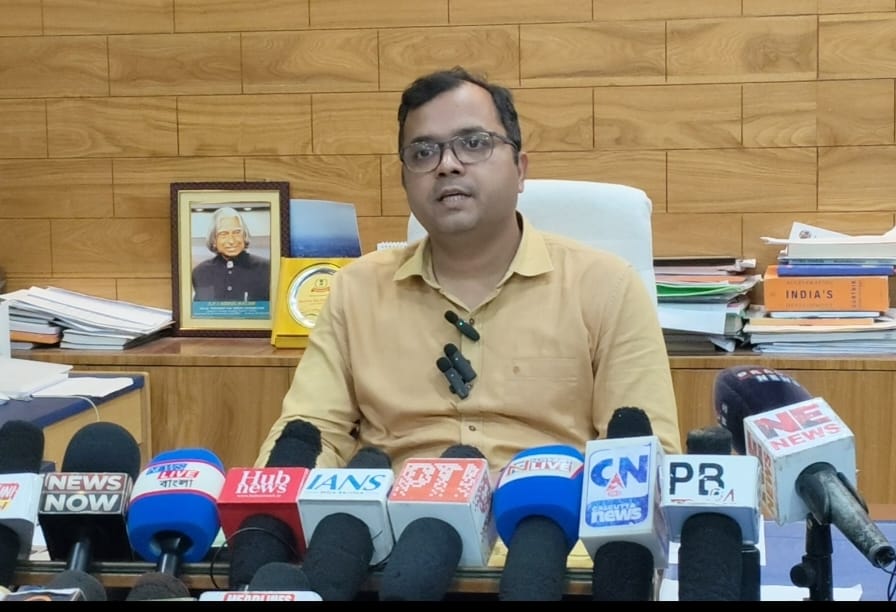
Addressing a press conference at the DM and Collector’s office here, Kumar said the objective was to ensure that eligible voters did not face unnecessary hardship during the revision.
“After publication of the draft roll, if somebody’s name is not there, his or her name will not be deleted. It will be the responsibility of the Booth Level Officer to visit the person’s house and collect the necessary information,” Kumar said.
He said hearings would not be required in every case and would be taken up only in exceptional circumstances. As far as possible, the process would be conducted virtually or through video calls.
Kumar also said a family member could appear before the concerned ERO on behalf of an elector who was unable to attend personally, including those staying away from their place of enrolment for employment or other reasons.
“If the person is not at the station or for some reason cannot come before the ERO, any family member can also be present in the hearing,” he said.
The district administration has directed all EROs and Assistant Electoral Registration Officers to maintain help desks and helpline numbers to assist electors during the SIR.
Special drives will also be undertaken through BLOs and EROs at locations such as hostels and ashrams, where people may not ordinarily be available at their permanent residences.
Kumar said the revised approach would put greater responsibility on the election machinery, particularly BLOs and EROs, to identify and address problems faced by electors during the revision.
Another change concerns the declaration associated with Form 6, used for inclusion of names in the electoral roll. Kumar said information on whether an applicant, or their parents or grandparents, had figured in the previous SIR roll would be sought during the SIR exercise.
However, the additional SIR-related declaration would not be required with Form 6 in areas where the SIR has already been completed.
The Election Commission’s recent decisions also followed reports of internal objections by Election Commissioners Sukhbir Singh Sandhu and Vivek Joshi over aspects of the SIR process, including changes to Form 6, access to electoral-roll databases and the functioning of election software. The Commission subsequently announced a review of its ECINet platform and other measures concerning voter verification.
The SIR in Tripura is scheduled to commence on October 27 with distribution of forms and is expected to continue for around four to five months.
Kumar said preparations for the exercise had already been completed, noting that the administration had initially planned to begin the process from September 5 but it was postponed due to the Village Committee elections.
He said the focus would be on ensuring that eligible electors did not face difficulties in retaining or restoring their names in the electoral roll and that grievances arising during the revision were addressed promptly through the BLO and ERO machinery.