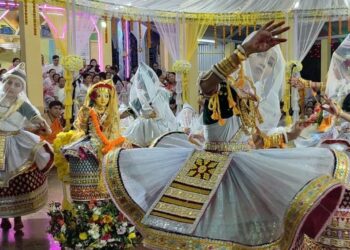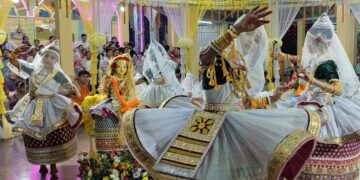


















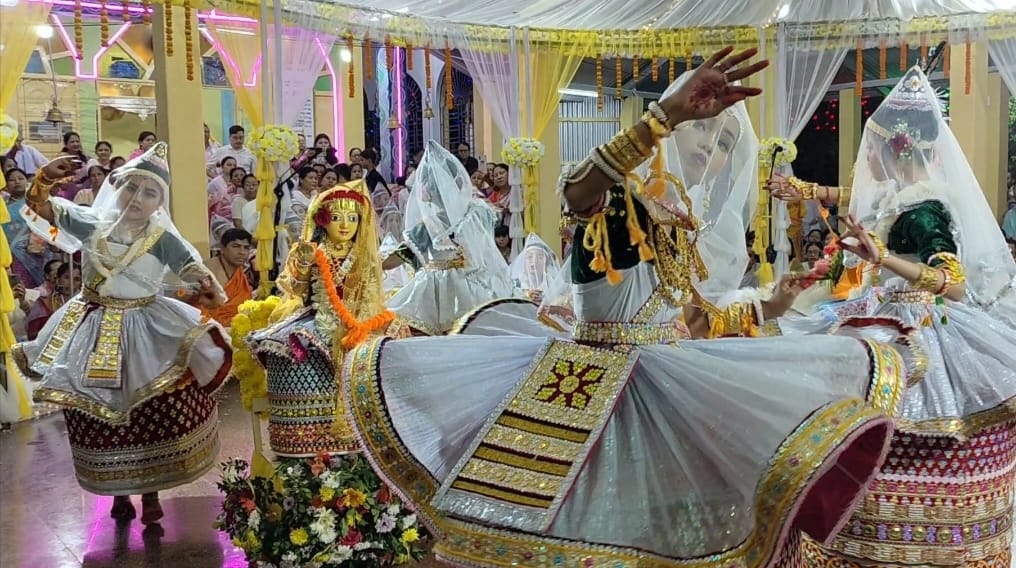
Agartala, Nov 24: The Vaishnav Hindu Manipuri community in Tripura celebrated its 228th Maha Raas festival with religious devotion and traditional cultural performances, drawing devotees from different communities to the historic Radha-Madhav temple in Agartala.

The annual celebration, commemorating the divine love of Lord Krishna and Radha, was held on the auspicious occasion of Kartik Purnima, with the traditional Raas Leela continuing through the night until early Tuesday morning.
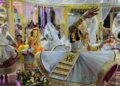
The temple premises witnessed devotional singing, traditional Manipuri music and elaborate dance performances, as young girls dressed in traditional attire portrayed Radha and the Gopis in the enactment of the divine Raas Leela.
Speaking about the festival, Abhijit Bhattacharya, a member of the organising community, said the celebration had been observed for 228 years and had evolved into a meeting point for people beyond religious and community boundaries.
“People from different communities come here, including Manipuris, members of the Vaishya community and indigenous tribal communities of Tripura. They offer prayers to Radha-Madhav and enjoy the Raas Leela,” he said.
Rajagopal Bhattacharjee, a priest in the temple, described the temple as a place of collective cultural and religious participation, saying the festival brought people together irrespective of their social and community backgrounds.
According to the organisers, the Raas Leela begins around 11 pm and continues until approximately 5 am, with traditional performances and devotional activities marking the night-long observance.
The Maha Raas tradition in Tripura dates back to 1798 AD, during the reign of Maharaja Rajdhar Manikya II. Its historical roots are associated with the royal relationship between Tripura and Manipur and the introduction of Vaishnav traditions into the state.
The tradition is also linked to Maharani Hariswari, daughter of Manipur’s Maharaja Bhagya Chandra, who brought the Radha-Govind idol from Manipur following her marriage into the Tripura royal family.
Over the centuries, the festival has become an important expression of the Manipuri community’s religious identity and cultural heritage in Tripura.
Beyond its spiritual significance, the annual celebration continues to reflect the historical cultural connections between the two neighbouring states, while providing a shared space for devotees and visitors from diverse communities to participate in the festivities.