


















Agartala,Nov12:The Tripura government will soon promulgate an ordinance to amend and repeal several archaic laws as part of its ongoing decriminalisation and ease of doing business reforms.

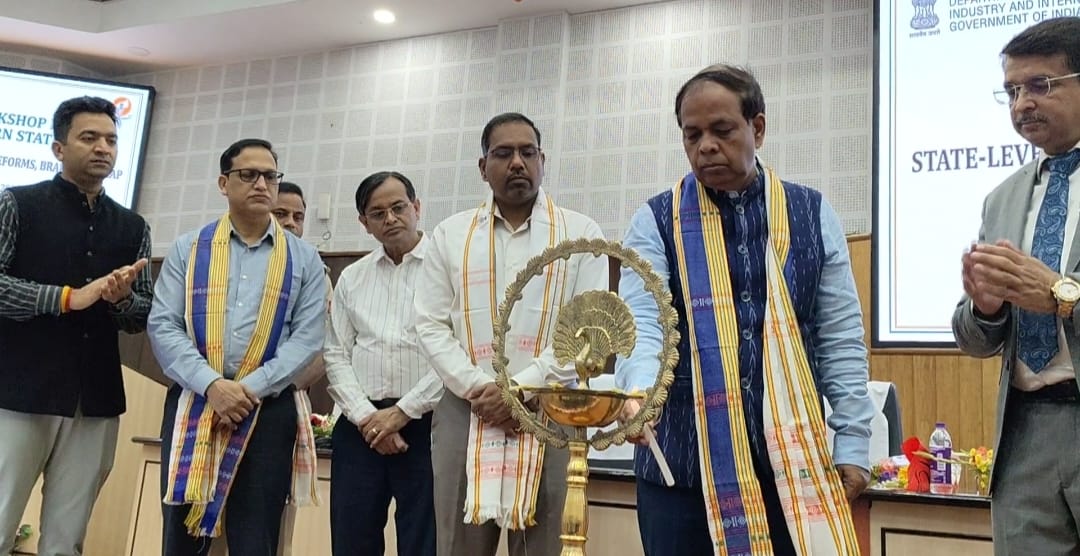
Addressing the inaugural session of a regional workshop on decriminalisation reforms for North-Eastern states in Agartala today, Industries Department Secretary Kiran Gitte said that a proposal to amend and repeal several Acts would be placed before the state cabinet in the second week of December. Following cabinet approval, an ordinance will be promulgated in this regard.
He said the move would bring Tripura into the league of states that have undertaken reforms by amending or repealing archaic laws.
Among the key legislations proposed to be amended in the second phase of reforms are the Tripura Agricultural Produce Market Act, Tripura Housing Board Act, Municipal Act, Tripura Panchayat Act, VAT Act, Fire and Emergency Services Act and Tripura Jal Board Act, among others. Besides, four Acts, including three under the Education Department and one under the Agriculture Department, are proposed to be repealed.
Earlier, the state government had repealed six Acts and amended four others.
Mr Gitte asserted that decriminalisation reforms in the business sector had helped Tripura improve its position significantly, moving from the 29th rank to the top position in the country’s reform rankings.
He further said that accelerated business reforms had helped attract as many as 41 educational institutions to the state. These include institutions in the fields of medicine, pharmacy and nursing, among others.
Speaking on the occasion, Director of the Department for Promotion of Industry and Internal Trade (DPIIT), Ministry of Commerce and Industry, Government of India, Rakesh Kumar Prajapati said that despite the economic reforms introduced in 1991, the manufacturing sector had remained far from achieving its desired growth potential due to the absence of a comprehensive Ease of Doing Business policy.
He said that following the launch of the reform agenda in 2014-15, India’s mobile phone industry had witnessed a remarkable transformation. Mobile phone exports, which stood at around Rs 1,500 crore, surged to Rs 2 lakh crore in 2024-25.
Chief Secretary J.K. Sinha, Secretaries Abhishek Singh, Dr Prashant Kumar Goyal, Dr Milind Ramteke and Dr K. Shashi Kumar, and Inspector General of Police (Law and Order) Manchak Ipper, among others, were present at the programme.