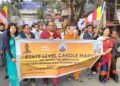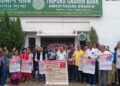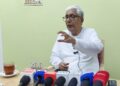

















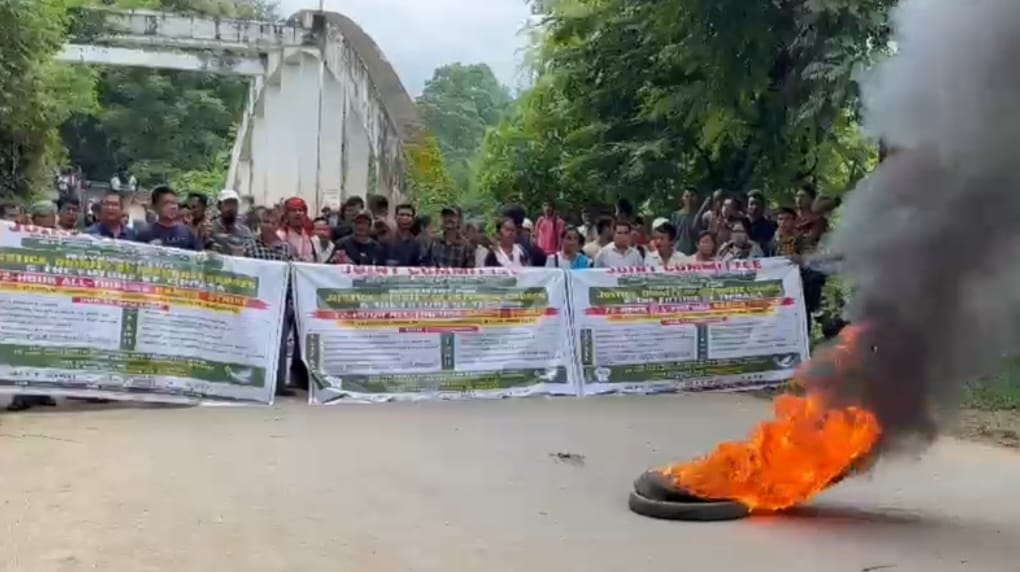
Agartala, Sept 4: A 72-hour rail and road blockade by a Joint Action Committee of surrendered ATTF and NLFT cadres and other groups began in Tripura on Friday, adding a fresh layer to the political pressure on the BJP-led government ahead of the September 28 Village Committee elections in the tribal areas.

The protesters blocked the National Highway at Hathaikotor in the Baramura hill range and disrupted railway movement at Brigudaspara, demanding implementation of the rehabilitation commitments made to surrendered militants under the agreement involving the Centre, the Tripura government and the former insurgent groups.
NLFT returnee leader Parimal Debbarma, speaking to reporters at the blockade site, alleged that the government had failed to honour assurances given during an earlier agitation.
He said the returnees had staged a similar blockade in June but withdrew it after Tribal Welfare Minister Bikash Debbarma and IG Special Branch official Krishnendu Chakraborty assured them publicly that their demands would be examined and resolved.
“We believed the assurances and withdrew the agitation, but more than two months have passed and there has been no meaningful discussion on our demands,” Parimal said.
The returnees are seeking proper rehabilitation, identification of those covered by the surrender process and implementation of the benefits promised under the 2024 rehabilitation agreement. They have alleged that despite surrendering their weapons and returning to civilian life, several commitments remain pending on the ground.
Parimal questioned why the government had failed to act despite repeated assurances, arguing that the concerned minister appeared to have little authority to resolve the issue. He warned that continued inaction could force the groups to intensify the agitation, including an indefinite blockade.
The renewed protest assumes political significance because it comes at a particularly sensitive moment for the BJP government. The TTAADC Village Committee elections are scheduled for September 28, and the ruling BJP is simultaneously engaged in difficult negotiations at New Delhi with its tribal ally, the Tipra Motha.
Tipra Motha founder Pradyot Kishore Manikya Debbarma has repeatedly insisted that his party cannot enter into an electoral understanding with the BJP without progress on the separate Tripartite Agreement concerning constitutional safeguards for Tripura’s indigenous population, including land rights.
Chief Minister Manik Saha and Debbarma are engaged in high-level political discussions with the Centre, with Union Home Minister Amit Shah playing a key role in the negotiations.
Against this backdrop, the surrendered militants’ renewed mobilisation highlights a broader political vulnerability for the government: agreements and assurances involving tribal and indigenous constituencies are increasingly being judged not by announcements but by implementation on the ground.
For the BJP, the immediate challenge is to prevent the blockade from escalating while maintaining political negotiations with TIPRA Motha.