


















Agartala, November 28: Tripura is moving towards a major restructuring of its health education system with the proposed establishment of a state Health University. However, the ambitious institutional initiative comes against the backdrop of a significant shortage of medical personnel, particularly nurses, raising concerns over the state’s ability to sustain its expanding healthcare infrastructure.
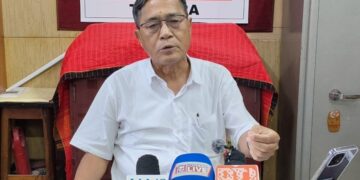
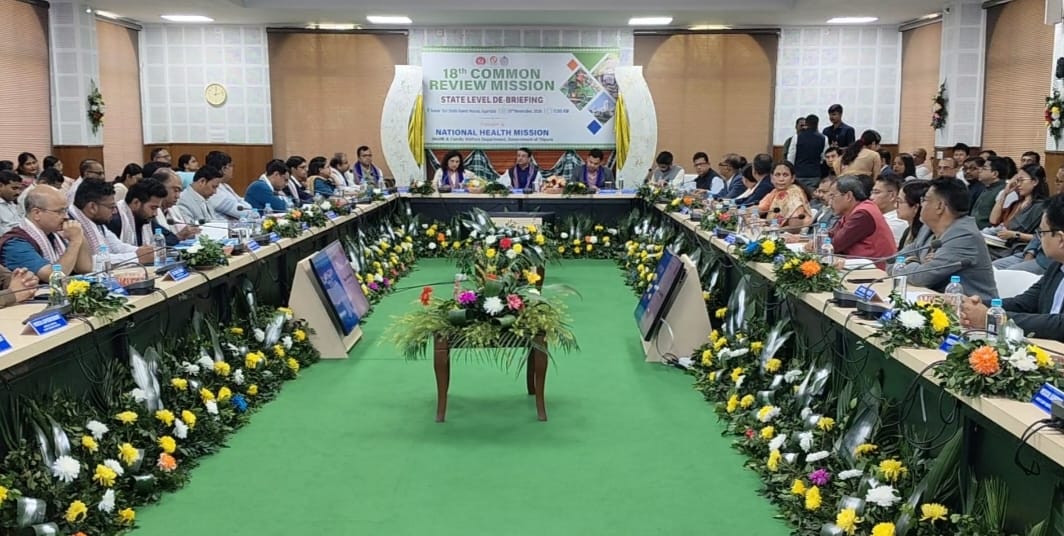
The state requires an estimated 2,000 to 2,500 additional nurses to meet its healthcare needs, Health Secretary Kiran Gitte revealed on Saturday. The disclosure came during a media briefing at the State Guest House in Agartala following a review meeting of the 18th Common Review Mission (CRM) of the National Health Mission.
Providing an update on the proposed Health University, Gitte said the legislation for its establishment has already been passed. The process of appointing its first Vice-Chancellor has also advanced, with an offer letter issued to Professor (Dr.) Pankaj Purushottam Rao, a surgery professor at the Armed Forces Medical College, Pune, and a retired Lieutenant General. He is expected to take charge shortly.
The proposed university is expected to bring approximately 41 institutions, covering medical education, nursing, pharmacy and paramedical courses, under a unified administrative framework. The move is intended to streamline academic supervision, improve educational standards and establish better coordination among healthcare training institutions.
The initiative is particularly significant for a state seeking to expand its pool of qualified medical professionals. A centralised university structure could help strengthen academic standards and create a more coordinated system for producing skilled healthcare workers.
Yet, the figures presented by the Health Secretary underline the scale of the challenge. Tripura currently has healthcare infrastructure with approximately 3,000 beds. Against this capacity, the state needs another 2,000 to 2,500 nurses to achieve the desired staffing standard. At present, the nurse-to-bed ratio stands at approximately one nurse per bed, whereas the ideal requirement, according to the Health Secretary, is two nurses per bed.
The government has initiated steps to create 332 regular nursing posts and another 100 contractual positions. Although this would provide some relief, the proposed 432 positions would address only a fraction of the estimated requirement. The gap between the proposed recruitment and the actual manpower demand highlights the need for a sustained recruitment and training strategy rather than limited additions to sanctioned strength.
The doctor shortage is another area requiring attention. Gitte said the sanctioned strength of doctors at Agartala Government Medical College and GBP Hospital has been increased from 300 to 630. However, the expansion of sanctioned posts must translate into actual appointments to strengthen patient care.
Meanwhile, public expectations from government healthcare facilities are changing rapidly. MRI services, once primarily demanded at district hospitals, are now increasingly being sought at sub-divisional hospitals. Similarly, the need for operation theatres is being felt at Primary Health Centres and Community Health Centres.
This changing demand reflects the growing expectation that advanced medical facilities should not remain concentrated in the state capital or district headquarters. However, extending specialised services to smaller healthcare institutions will require a corresponding expansion of specialist doctors, nursing staff and technical personnel.
On the infrastructure front, work has started on a temporary campus for RIPSAAT using two vacant buildings. Steps are also being taken to begin construction of the administrative building of Agartala Government Medical College.
The developments were discussed during the review meeting attended by a 14-member central delegation of the National Health Mission’s 18th Common Review Mission. The delegation was led by Dr. Indu Grewal, Additional Commissioner of the Union Ministry of Health and Family Welfare, while Dr. Piyush Singla, Director of the National Health Authority, attended as an observer.
The central team reviewed the state’s healthcare infrastructure, service delivery mechanisms and implementation of various health programmes. It is also scheduled to visit healthcare institutions in Gomati and North Tripura districts to assess the ground-level functioning of the health system.
Two important state initiatives were also presented before the delegation. These include the four-year-old ‘Mukhyamantri Sushta Shishu, Sushta Kishore’ programme and the recently launched ‘Mukhyamantri Niramay Arogya Abhiyan’, which focuses on controlling lifestyle-related diseases among people above 30 years of age.
The larger challenge for Tripura’s healthcare sector now lies in bridging the gap between infrastructure expansion and manpower availability. Establishing a Health University could strengthen the foundation of medical education and professional training, but its long-term relevance will depend on how effectively it contributes to meeting the state’s growing demand for qualified personnel.
With hospitals expanding their capacity and demands for advanced treatment reaching even sub-divisional and primary healthcare facilities, the shortage of nurses and doctors has emerged as a critical issue. For Tripura, the next phase of healthcare development will therefore require more than new buildings, additional beds and institutional reforms. It will require a substantial and sustained investment in the people who actually deliver healthcare services.