















New Delhi, Nov 20: BJP national president Nitin Nabin on Friday said Prime Minister Narendra Modi’s 25 years of public service have been guided by the principle of ‘Nation First’, while ‘Bharosa’ (trust) defines his political journey.

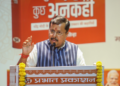
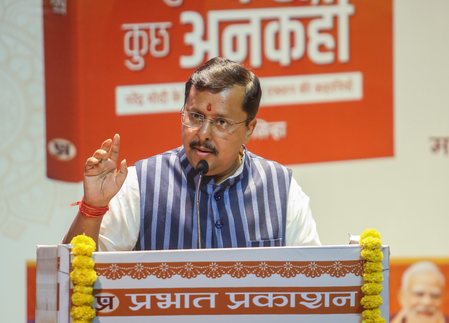
Speaking at the launch of the book ‘Kuch Kahi, Kuch Ankahi’, authored by Amitabh Sinha, Nabin said the publication offers insights into Modi’s personality, leadership, working style and commitment to the organisation and the country.
Congratulating the author, he said the book captures lesser-known aspects of the prime minister’s journey without sensationalism or embellishment.
Nabin said Modi had successfully combined India’s cultural and spiritual heritage with modern technology, innovation and progressive thinking. Initiatives ranging from the Ram Temple and Mahakal Lok to digital governance reflected this blend of tradition and modernity, he said.
Recalling Modi’s journey from Gujarat to national leadership, Nabin said he had transformed challenges into opportunities, particularly when he assumed charge as Gujarat chief minister in 2001.
His emphasis on public participation, direct interaction with citizens and understanding grassroots concerns had helped establish public trust, he said.
Nabin also recalled his interactions with Modi during the 2012 Gujarat Sadbhavana Mission and the 2013 Patna rally, highlighting the prime minister’s ability to understand public sentiment and maintain personal connections with party workers.
He said Modi’s respect for party workers and emphasis on placing organisational interests above individual ambitions had contributed to the BJP’s expansion.
Highlighting five principles of Modi’s working style, Nabin said these included thinking beyond conventional approaches, challenging limitations, prioritising basic necessities, setting new benchmarks and taking everyone along.
Citing examples, he referred to the introduction of GST, replacement of the Planning Commission with NITI Aayog, Jan Dhan accounts, Direct Benefit Transfer and UPI.
He also mentioned the construction of 12 crore toilets, Ujjwala Yojana, household electrification, housing for the poor and Ayushman Bharat as initiatives placing basic necessities at the centre of governance.
Nabin said the government’s approach of zero tolerance towards corruption, terrorism and Naxalism reflected new governance benchmarks.
He also cited India’s COVID-19 vaccination drive, during which 220 crore doses were administered, as an example of public participation and collective effort.
Emphasising inclusive development, he said the vision of ‘Sabka Saath, Sabka Vikas, Sabka Vishwas, Sabka Prayas’ was central to the goal of building a developed India by 2047.