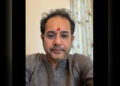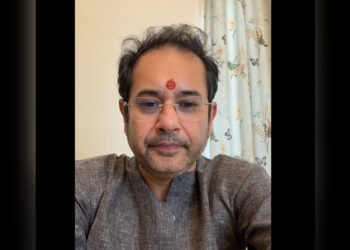















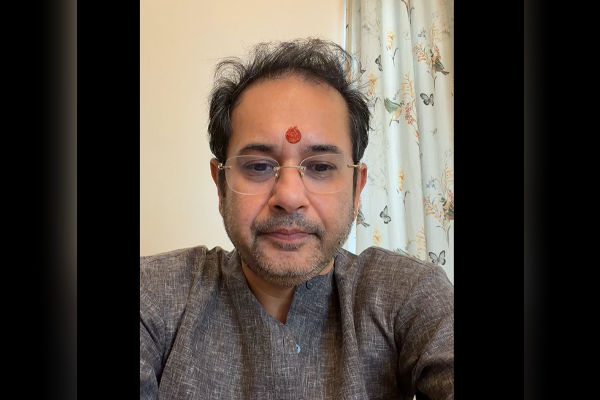
Agartala, September 19: Tipra Motha founder Pradyot Kishore Debbarma has indicated that he may step away from active politics and relinquish his formal position in the party, saying that remaining outside organisational politics would give him greater freedom to speak openly against wrongdoing, including by leaders of his own party.

In a lengthy social media address, Debbarma said he wanted to remain in Tripura as “Bubagra” and work for the interests of the indigenous people rather than remain tied to a political post.
“If I remain in full-time politics with a post, sometimes I have to remain silent. And when I cannot speak for my people, for my poor people, it pains me,” he said.
Debbarma said he had discussed the issue with people close to him and asked why he should continue as president of Tipra Motha if people would address him as “Bubagra” rather than by his party designation.
He said his objective was to be in a position where he could openly question any leader if they did something wrong and demand corrective action.
“If our leaders, MLAs or MDCs do something wrong, I can directly tell them that this is wrong. I am no longer in Tipra Motha, but this is wrong, and if you do not correct it, I will speak publicly,” he said.
Debbarma linked his proposed shift to the implementation of the Tiprasa Accord, saying Chief Minister Manik Saha had stated that the agreement would be implemented.
“Now the Chief Minister of the state has said it. It is up to him that the accord is implemented,” he said, adding that the rights sought by the indigenous people were not intended to take anything away from anyone but to help their own people progress.
He said his entry into politics was driven by the condition of the indigenous people and not by an ambition to make money or acquire political power.
Recalling his political journey, Debbarma said he had seen the condition of people in different parts of Tripura, including Bru settlements, Dumbur, Madhavbari and Agartala, and entered politics because he felt compelled to work for them.
But politics, he said, could create a situation where a person became attached to political power and was consequently unable to speak “100 per cent” freely for the people.
“My power is not Tipra Motha. My power is being your Bubagra, someone you trust and someone who you love,” he said.
Debbarma also spoke at length about what he described as two developments that had caused him particular pain following the recent Tripura Tribal Areas Autonomous District Council (TTAADC) elections.
The first, he said, was the emergence of allegations of corruption in the ADC. He claimed he had tried to intervene but was unable to prevent the alleged wrongdoing and said his concerns were not heard by officials.
“I tried, but the officers did not listen to me. Then you understand how rotten the system is,” he said.
He said he was particularly distressed because the political consequences of alleged wrongdoing by individual leaders were ultimately reflected in his name.
According to Debbarma, candidates contesting elections under the Tipra Motha banner benefited from his image among voters, but any alleged wrongdoing by MLAs, MDCs or local leaders also damaged his reputation.
He also expressed concern over political leaders leaving him before or after elections, saying that many politicians were primarily interested in power while ordinary people wanted a better future.
Referring to the recent ADC election, in which Tipra Motha won 24 of the 28 elected seats, he said the political loyalty of some leaders could have been different had the party not secured such a result.
“If we had not won, I think many of the leaders would have left me,” he said, recalling similar experiences in West Bengal and during his association with the Congress in Tripura.
Debbarma also referred to former party colleague Saudagar, who he said had left him and was now writing against him on Facebook. He said he nevertheless had no hatred for him and recalled that he had opposed suggestions that Saudagar should not be given a party ticket because of his father’s political affiliation.
The remarks come amid a major political realignment ahead of the September 28 Village Committee elections under the TTAADC. The BJP, Tipra Motha and IPFT have decided to contest the polls together, following discussions involving Debbarma, Chief Minister Manik Saha and Union Home Minister Amit Shah.
The proposed alliance has also drawn criticism from opposition parties, including the Congress and CPI(M), which have questioned the political positions and alliance strategy of Tipra Motha. The parties had contested the April TTAADC elections separately, with Tipra Motha winning 24 of the 28 elected seats. The subsequent BJP-Tipra Motha understanding for the Village Committee polls has therefore marked a significant change in their electoral positioning.
Against this backdrop, Debbarma’s latest remarks appear to signal a possible change in his own political role. Rather than withdrawing from public life, he said he wanted to remain in Tripura and continue working for the Tiprasa people, but outside the constraints of a formal political position.
“This does not mean I am going to disappear,” he said. “I am not going to leave my Tiprasa people alone. My method will change, but my goal will remain the same — to protect the interests of my Tiprasa people.”
His remarks suggest that, if he eventually gives up his organisational position, Debbarma intends to retain his influence as “Bubagra” while positioning himself as an independent voice capable of publicly questioning political leaders, including those associated with his own former party.