


















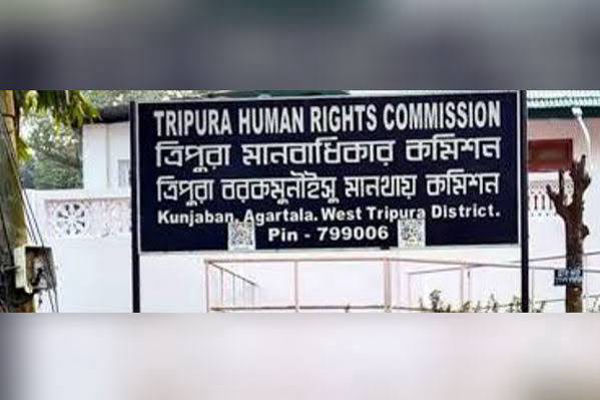
**Agartala, September 17:** Public infrastructure agencies should follow clearer procedures when their projects affect private businesses, advertising structures or other lawful establishments, the Tripura Human Rights Commission has said, recommending advance written communication, proper documentation and a formal grievance mechanism.

The recommendations were made in an order dated September 9 on a complaint submitted by Joyesh Bhowmik, proprietor of Supreme Media. Bhowmik had alleged that advertising hoardings were damaged and removed during drainage work undertaken by Agartala Smart City Ltd (ASCL).
The Commission, headed by Justice Arindam Lodh, said the evidence available in the case did not establish a human rights violation warranting compensation. However, it observed that the proceedings pointed to shortcomings in communication, documentation and consultation with stakeholders during the execution of the project.
The Commission recommended that ASCL, Agartala Municipal Corporation (AMC) and agencies implementing infrastructure works issue written notices in advance if the proposed activities are likely to affect commercial establishments, hoardings, kiosks or other lawful structures.
The notice should contain details of the work, its anticipated duration and any requirements for affected persons, it said. The Commission further observed that verbal communication or telephone calls should ordinarily not be treated as sufficient in place of written notice.
It also stressed the need for proper documentation throughout the process. Records should include copies of notices, acknowledgements, details of consultations and photographs showing the condition of affected structures before and after any removal.
Authorities were advised to plan works in a way that reduces disruption to lawful businesses and protects livelihoods wherever feasible. The Commission also recommended setting up a dedicated grievance redressal mechanism for people affected by Smart City projects.
Such a mechanism should address issues including obstruction of access, property damage, relocation of utilities and business losses, according to the order.
The Commission also recommended sensitising project engineers, contractors and field supervisors about the need to respect the dignity and livelihoods of citizens during project implementation.
ASCL, AMC and other utility agencies were asked to improve coordination and ensure that affected persons receive clear and uniform information about project-related activities.
The Commission additionally emphasised that relevant electronic evidence, including call records, photographs and videos, should be preserved when such material is relied upon in disputes arising from public infrastructure projects.
The recommendations seek to strengthen transparency, accountability and communication between project authorities and people whose lawful commercial activities or structures may be affected by civic works.