




















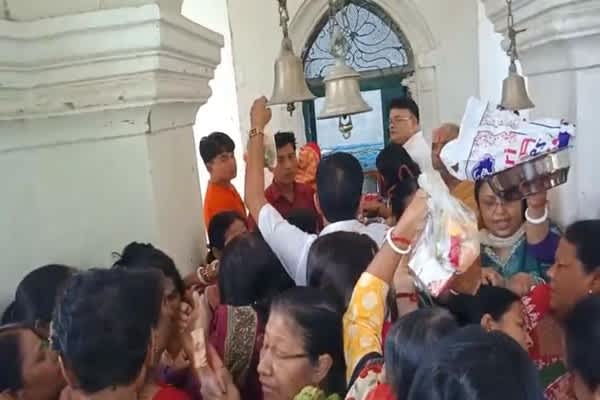
Agartala, May 12: Ujjayanta Palace in Agartala witnessed a massive gathering of devotees on Tuesday as the historic Mangalchandi Puja was performed at the inner sanctum of the palace temple. The occasion marked the final Mangalchandi Puja of the Bengali month of Baisakh, observed every year on the last Tuesday of the month with deep religious fervour and traditional rituals.

From the early hours of the morning, devotees from different parts of Tripura gathered at the palace premises to offer prayers and seek blessings of Goddess Mangalchandi. The atmosphere around the historic palace was filled with devotion as pilgrims participated in rituals, chanted hymns and offered flowers, sweets and other sacred items at the temple.
The centuries-old tradition continues to hold immense religious and cultural importance for the people of the state. According to historical accounts, the Mangalchandi Puja at Ujjayanta Palace was first introduced by Maharani Tulsibati of Tripura’s royal family. It is believed that the Maharani, following a divine vision, consecrated the sacred idol of Goddess Mangalchandi within the palace premises. Since then, the ritual has been observed every Tuesday during the month of Baisakh and has become an integral part of Tripura’s royal and spiritual heritage.
Devotees believe that worshipping Goddess Mangalchandi during Baisakh brings prosperity, peace and protection from hardships. Many families have continued the tradition for generations, visiting the temple annually to participate in the rituals.
The final puja of the month attracted a particularly large number of worshippers, with arrangements made to ensure smooth movement and proper management of the crowd within the palace complex.
For the people of Tripura, the Mangalchandi Puja is not only a religious observance but also a symbol of the state’s rich cultural legacy. The continuation of this tradition at Ujjayanta Palace reflects the enduring connection between Tripura’s royal history, spirituality and community life.
The annual observance also reinforces the importance of preserving historical traditions that continue to unite people through faith and shared cultural identity.