

















Agartala, March 21:

A day after a stormy session in the Tripura Legislative Assembly ended with a walkout by Opposition parties, Chief Minister Manik Saha on Saturday strongly defended the government’s move to introduce three Bills aimed at setting up private universities in the state, rejecting allegations of opacity and regulatory concerns.
The Opposition, led by Communist Party of India (Marxist) and the Indian National Congress, had staged a protest in the House on Friday, demanding that the proposed legislations be either withdrawn or referred to a Standing Committee for detailed scrutiny. Their plea was denied, prompting a coordinated walkout.
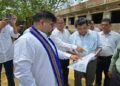
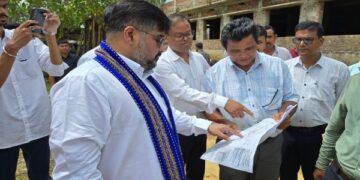
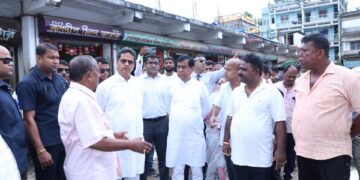
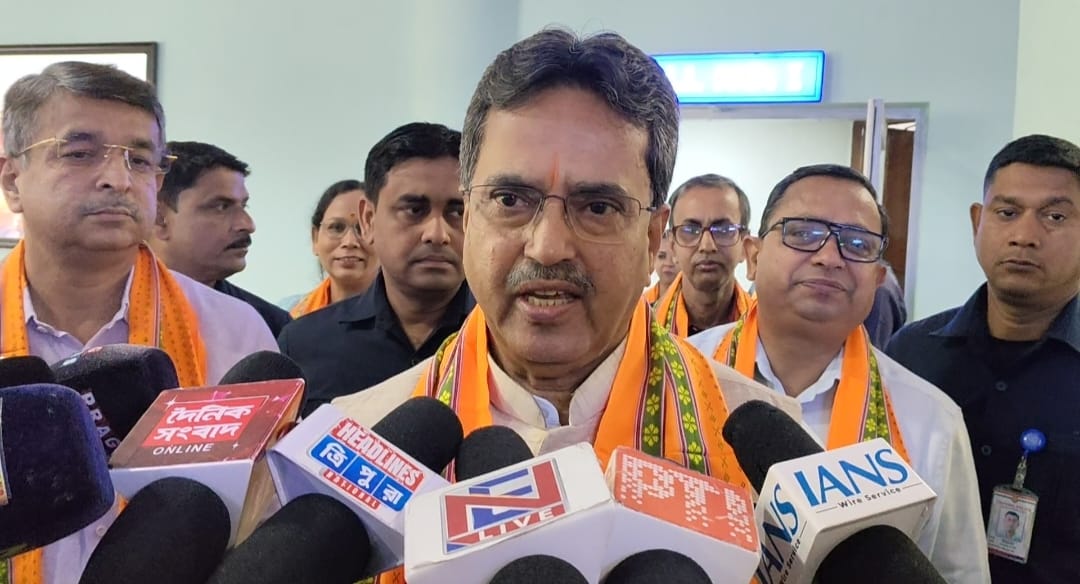
Responding to the criticism on the sidelines of an official programme at Pragna Bhawan, the Chief Minister dismissed the concerns as politically motivated and lacking substantive basis.
Drawing a comparison with Sikkim, Saha argued that smaller states with fewer populations have leveraged higher education infrastructure to drive economic growth.
“Sikkim, with a population far below Tripura, has around 23 universities and the highest per capita income in the Northeast. If we want to progress, we must expand our educational infrastructure and revenue base,” he said.
The Chief Minister maintained that establishing more universities in Tripura would not only benefit local students but also attract aspirants from outside the state, thereby boosting economic activity, including GST collections and per capita income.
Addressing concerns over regulatory compliance, Saha asserted that no institution would be allowed to function without adhering to norms set by the University Grants Commission.
“No guardian will admit their child to an unrecognised institution. We will ensure strict monitoring and intervene wherever necessary,” he said, adding that the government remains committed to screening proposals rigorously.
He also accused the Opposition of adopting a contradictory stance, questioning their resistance to private universities now while similar institutions were established during their tenure.
“If we begin to examine their track record, what answers will they have?” he asked.
Highlighting the challenges in attracting reputed institutions, Saha noted that universities evaluate commercial viability before expanding to smaller states.
“Even reputed names do not come easily. That is why we are acting cautiously, ensuring only credible institutions are allowed,” he added, indirectly referencing past experiences with failed ventures such as GENET.
Underscoring the social dimension of the initiative, the Chief Minister pointed out that many students from economically weaker families are forced to leave the state for higher education, placing a financial burden on households.
“If quality institutions are available here, it will reduce that burden and create opportunities locally,” he said.
Saha also made a case for establishing a dedicated Health University in the state, citing the expansion of medical education infrastructure, including existing and upcoming medical, dental, nursing, and paramedical institutions.
He said such a university would streamline academic governance and strengthen the healthcare education ecosystem.
Referring to institutions outside the state, including Jawaharlal Institute of Postgraduate Medical Education and Research and King George’s Medical University, the Chief Minister noted that students currently have limited local options for specialised medical studies.
He concluded by asserting that increased public awareness, driven by digital access, ensures that only recognised and credible institutions will succeed.
“People today verify affiliations, infrastructure and recognition before making decisions. This will naturally ensure quality,” he said.
The confrontation over the university Bills has added to the intensifying political contest ahead of key electoral exercises in the state, with the education sector emerging as a fresh flashpoint between the government and the Opposition.