




















Agartala, January 13:With Makar Sankranti set to be observed from midnight on Wednesday, a wave of festive spirit has swept across northeastern Tripura, where the harvest festival is popularly celebrated as Poush Sankranti with age-old customs, rituals and cultural fervour.

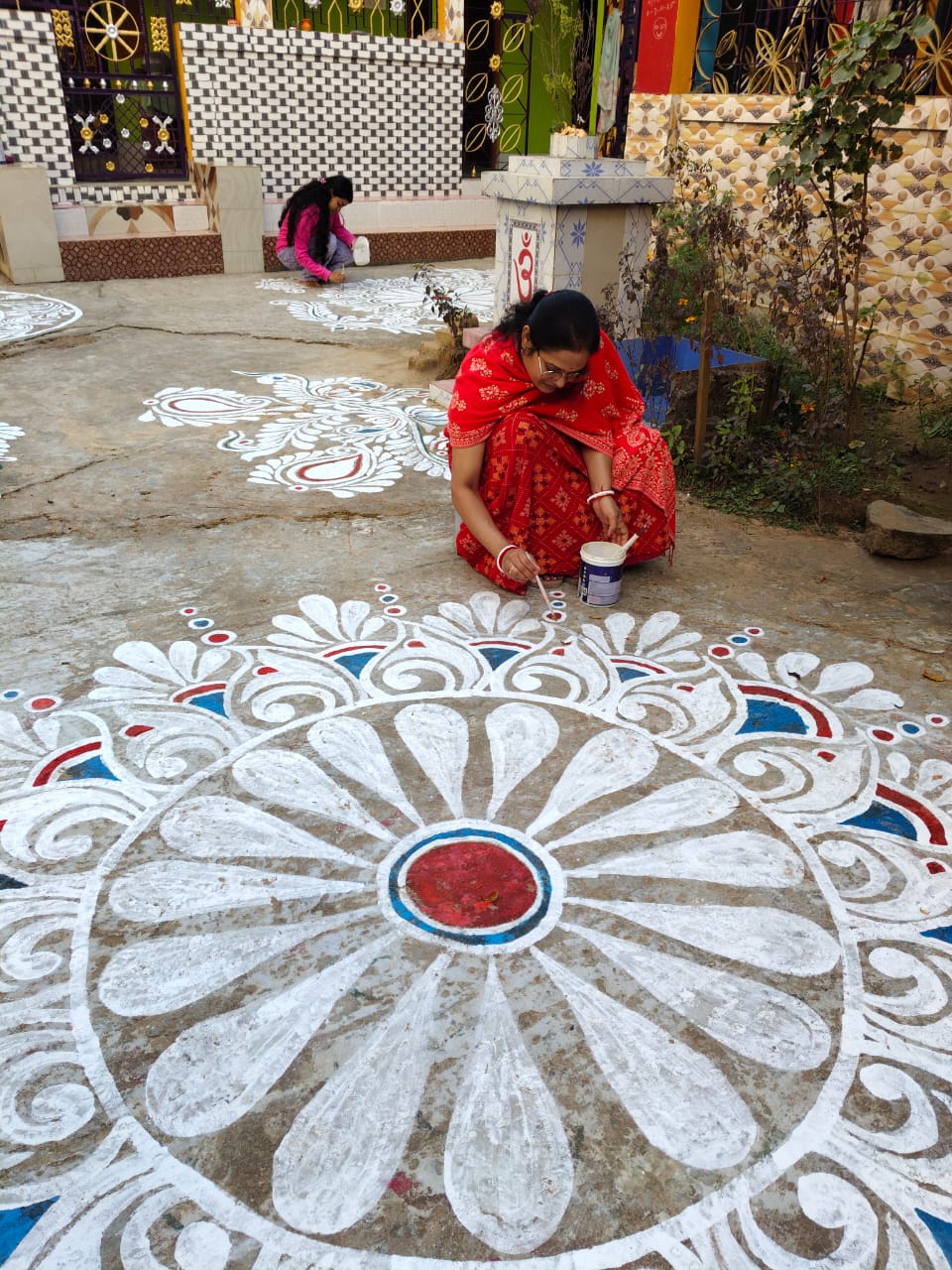
In villages across the state, women are actively engaged in cleaning their homes and embellishing courtyards with colourful ‘alpanas’, a traditional form of rangoli.
These intricate floor designs, drawn during Hindu festivals, are symbolic of purity, prosperity and the welcoming of positive energies into households.
Poush Sankranti holds deep cultural significance in Tripura and has been celebrated for generations with devotion and enthusiasm. The art of ‘alpana’ is traditionally passed down from mothers and grandmothers to younger women, ensuring the continuity of this rich cultural heritage.
In earlier times, ‘alpanas’ were created using natural colours derived from leaves, soil and other organic materials, while rice flour made from freshly harvested paddy was used to prepare rice cakes and sweet offerings for deities.
With changing lifestyles and increasing urban influence, however, synthetic colours and commercially available rice flour are now being widely used.
The festival also marks rituals dedicated to the Sun God and ancestral worship.
Families prepare and offer various dishes made from the new harvest, including rice cakes, sweets and seasonal vegetables, during ceremonies locally known as Alanti.
The decorative patterns adorning courtyards are believed to invite Goddess Lakshmi, symbolising prosperity, good health and abundance.
Although the practice has diminished in urban areas due to fast-paced lifestyles, it remains deeply rooted in rural Tripura, where Poush Sankranti is considered highly auspicious and is observed with great devotion and celebration.
In some villages, traditional customs also include the making and burning of small thatched structures during the early hours of the day.
According to Hindu belief, the final day of the month of Poush is observed as Makar Sankranti, a day associated in mythology with the passing of Bhishma during the Kurukshetra war between the Pandavas and the Kauravas.
The word Makar denotes Capricorn, while Sankranti signifies transition. On this day, the Sun begins its northward movement, known as Uttarayan, shifting from Sagittarius to Capricorn as per the Gregorian calendar.
Celebrated in the Hindu month of Magha, Makar Sankranti marks the commencement of the auspicious six-month Uttarayana period.
The festival also signifies a seasonal transition, as days gradually grow longer and warmer, heralding the retreat of winter.