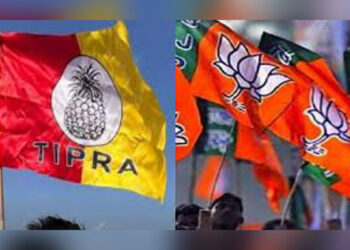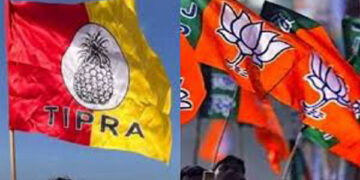
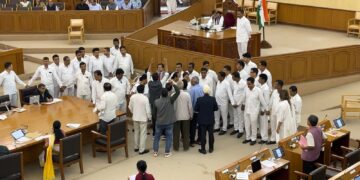
















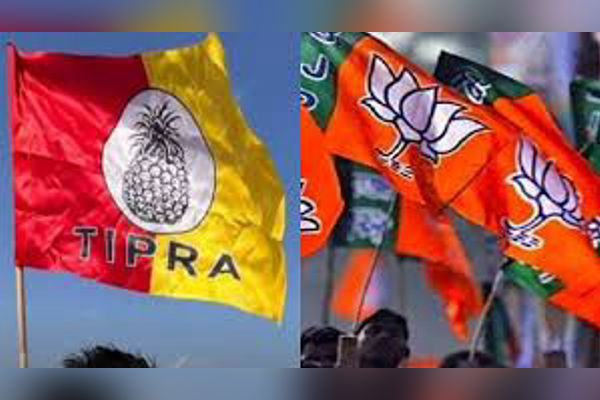
The prospects of a political understanding between the BJP and Tipra Motha ahead of the crucial TTAADC elections remain shrouded in uncertainty, with leaders from both sides issuing conflicting statements that have added to the confusion. While initial positions from both parties suggested a clear separation, recent developments indicate that the situation may be more fluid than publicly acknowledged.

For the past few months, the BJP had maintained that it was prepared to contest the elections independently, projecting confidence in its growing grassroots presence in the TTAADC areas. However, party sources have now indicated that discussions for a possible alliance are underway, with both sides reportedly open to exploring a joint electoral strategy.
On the other hand, the Tipra Motha Party had consistently portrayed the BJP as an external force in the ADC regions, building its campaign narrative around resisting its influence. Yet, following the announcement of the poll schedule, subtle shifts in tone emerged, with indications that the regional party might be willing to consider a political understanding under certain conditions.
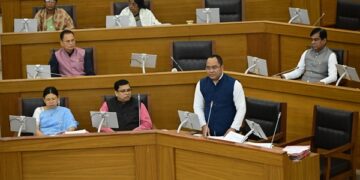
The situation took a dramatic turn when rebel-turned-MLA Ranjit Debbarma claimed that a high-level meeting between BJP and Tipra Motha leaders was underway in New Delhi. He suggested that a joint contest had been agreed upon in principle, though details of seat-sharing were yet to be finalized. However, within hours, Debbarma retracted his statement through a video message, further deepening the ambiguity.
Adding to the uncertainty, Tipra Motha supremo Pradyot Kishore Debbarman dismissed reports of any alliance. In a statement, he clarified that media reports were inaccurate and that no formal agreement had been reached. He emphasized that as a regional party, Tipra Motha could not afford to compromise its political ground in indigenous areas, asserting its position as the dominant force in the region. He also termed certain personal statements as unfortunate and detrimental to constructive dialogue.
Despite the public denials, political observers believe that the possibility of an alliance cannot be entirely ruled out. Both parties are seen as having strategic interests in maintaining cordial relations, leaving the door open for last-minute negotiations as the elections approach.