



















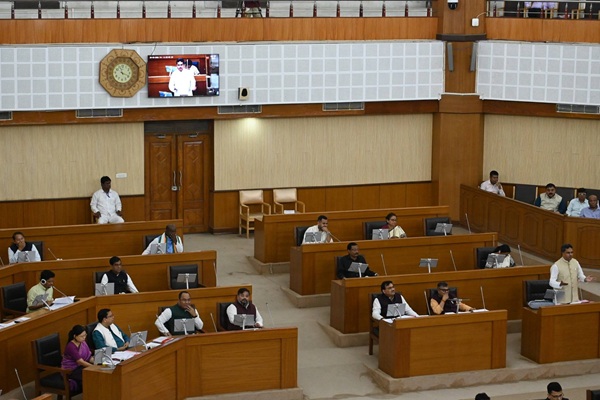
The completion of all 65 projects under Agartala’s Smart City Mission by June 30, 2025, is being widely regarded as more than just an infrastructural milestone—it marks a significant shift in how the city approaches governance and citizen engagement. Addressing the Assembly on Thursday, Chief Minister Dr. Manik Saha emphasized that the achievement reflects a broader transformation toward integrated governance, transparency, and participatory urban planning.

Observers point out that the Smart City initiative has extended well beyond the construction of roads and physical infrastructure. It has introduced systems designed to directly connect citizens with urban services and governance processes. Waste management reforms, for example, now ensure that compost generated from city waste is redistributed to farmers, creating a sustainable link between urban households and rural livelihoods. Recycling initiatives have also opened new avenues for local entrepreneurs by integrating them into municipal supply chains, effectively turning waste into economic opportunity.
Financial accountability has been another cornerstone of the programme. The government has submitted utilisation certificates covering nearly the entire ₹541.04 crore expenditure, a move seen as reinforcing transparency in large-scale public projects. Additionally, ward-level data has been made publicly accessible, enabling residents to see which areas have benefited most. This has sparked constructive discussions around equitable distribution of resources and development.
With the core Smart City projects now complete, Agartala is entering a new phase of urban transformation. Projects funded by the Asian Development Bank, including the development of smart roads and the Panchabati–Battala corridor, are already underway. These initiatives are being positioned not merely as infrastructure upgrades but as part of a long-term resilience strategy aimed at enhancing livability, sustainability, and inclusivity.
Urban analysts believe the most significant achievement lies in the shift in governance style. The Smart City Mission has helped move Agartala away from a purely top-down model toward one that integrates infrastructure development with environmental priorities and active citizen participation. For residents, the milestone represents not just the completion of projects, but the emergence of a city that is more responsive, adaptive, and aligned with the needs of its people.