
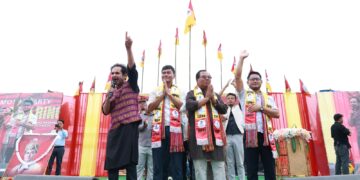















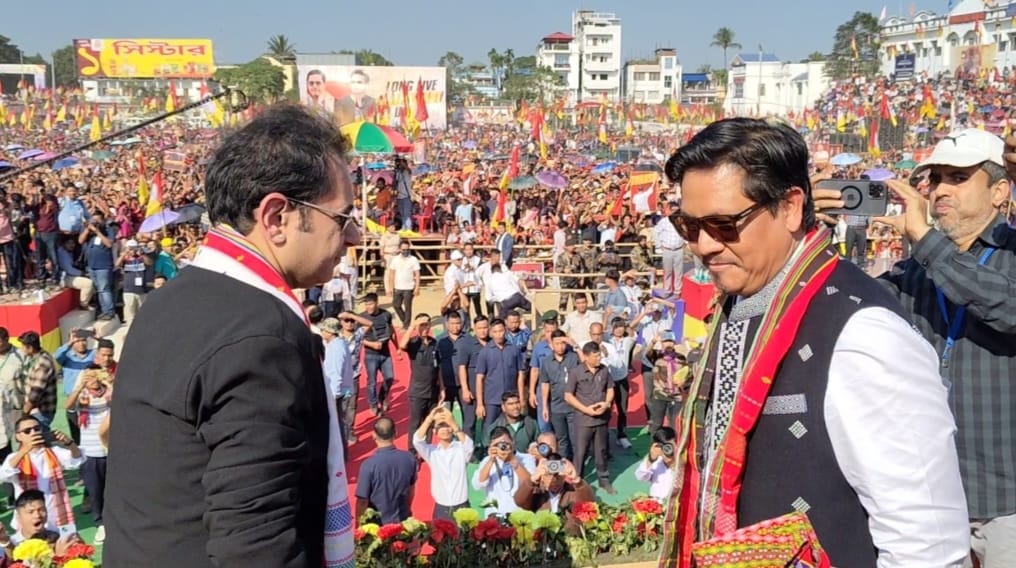
Meghalaya Chief Minister Conrad Sangma on Thursday reaffirmed that the newly launched ‘One North East’ movement is not directed against any individual, group, or political organisation. Addressing a massive gathering at the first public rally of the initiative held at Swami Vivekananda Maidan in Agartala, Sangma stressed that the platform seeks to unite the indigenous communities of the region, whose concerns often remain “suppressed or unheard” when raised in isolation.

Sangma underlined that unity is essential for ensuring that the voices of indigenous people are adequately heard at the national stage. He observed that emotion is both the greatest strength and vulnerability of the region’s communities. Once committed to a cause, he said, indigenous groups remain resolute, but this very determination can be exploited by those attempting to divide them. “Forces will try to divide us using different techniques,” he warned, urging participants to remain vigilant as the movement grows.
Clarifying misconceptions, Sangma emphasised that the movement is inclusive and forward-looking. “This has nothing to do with anybody else, nor are we trying to go against anyone. This is purely about bringing all of us together. We are looking ahead to bringing our voices, our concerns, our strength, and being there for each other. We need to make sure that nobody feels they are alone,” he said.
The Chief Minister expressed confidence that a unified platform of indigenous communities will have a transformative impact not only on the Northeast but across the country. A strong collective voice, he noted, would send a clear signal that the region’s people are determined to secure their rights, preserve their identity, and protect future generations. Despite past and ongoing challenges, he urged the gathering to stay committed to strengthening this unity for the welfare of the region.
Addressing the rally, TIPRA Motha founder Pradyot Bikram Manikya Deb Barma echoed the sentiment of consolidation. He clarified that indigenous regional forces are “amalgamating, not merging,” signalling a strategic alignment rather than political absorption. This unification, he said, aims to confront long-neglected issues such as the implementation of Inner Line Permit (ILP), illegal migration, and land rights—matters that have shaped the socio-political landscape of the Northeast for decades.
Pradyot stressed that the effort is intended to fortify regional identity and prevent national parties from exploiting deep-rooted tribal, ethnic, and religious divides. With leaders calling for vigilance and solidarity, the One North East movement is positioning itself as a significant collective voice for indigenous rights and regional unity.